
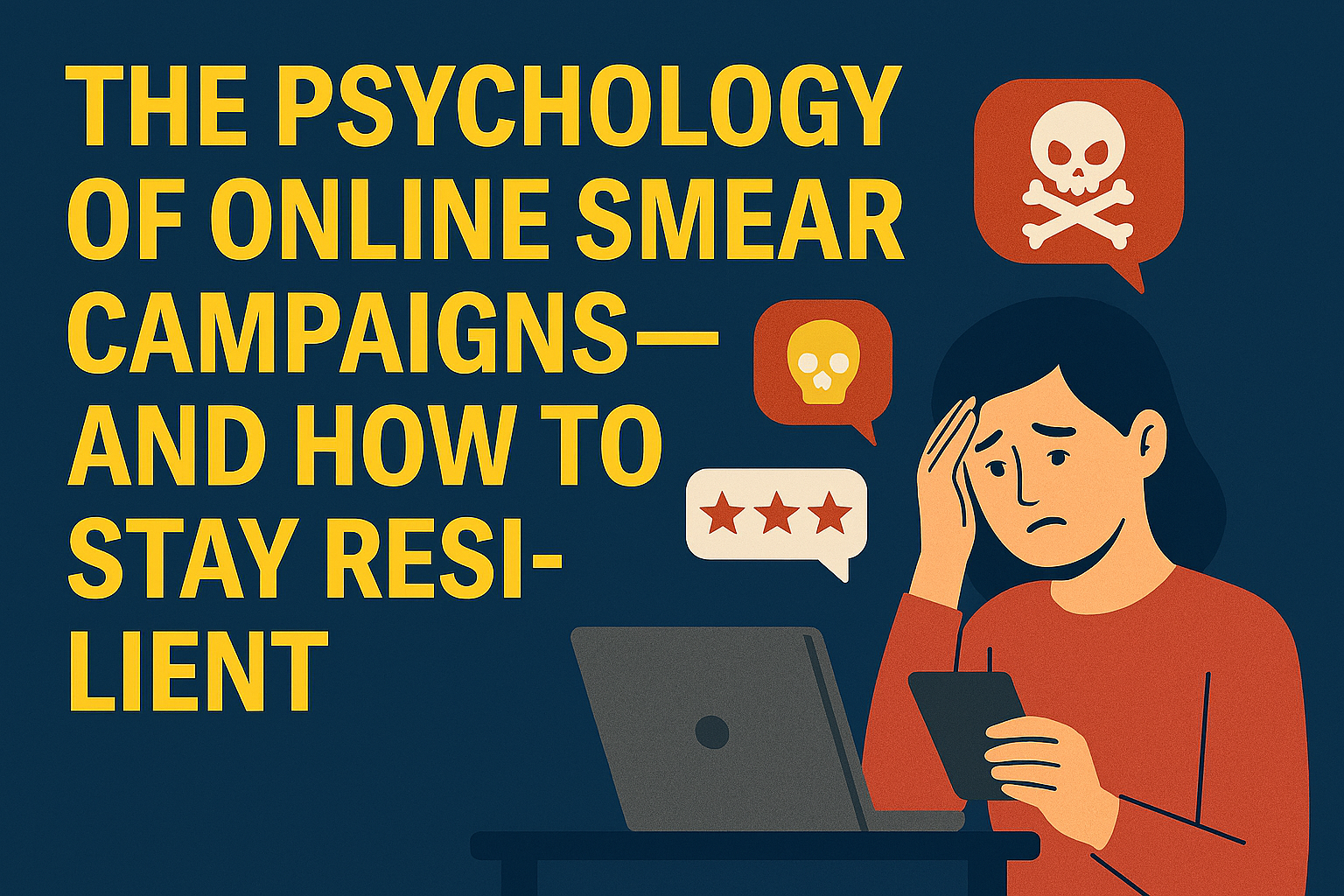
When your name becomes the target of an online smear campaign, it’s not just your reputation at stake—it’s your emotional bandwidth, your focus, and your sense of safety. Understanding the psychology behind these attacks can help you respond with forensic clarity and emotional discipline. This guide breaks down the motives behind smear campaigns and offers tactical strategies to stay resilient.
🧠 Why Smear Campaigns Happen
Online smear campaigns are rarely random. They’re often driven by:
- Revenge or resentment: A former colleague, competitor, or disgruntled client may feel slighted and seek retaliation.
- Power dynamics: Smearers often feel powerless in real life and use digital platforms to assert control.
- Projection and displacement: Attackers may project their own insecurities or failures onto you.
- Groupthink and mob behavior: In coordinated campaigns, attackers feed off each other’s outrage, amplifying harm.
Understanding these motives helps depersonalize the attack. It’s not about truth—it’s about control, emotion, and visibility.
🧩 Psychological Tactics Used by Smearers
Smear campaigns often rely on:
- Gaslighting: Making you doubt your own reality or professionalism.
- Dog-whistling: Using coded language to incite others without direct accusations.
- Repetition: Repeating false claims to make them seem credible.
- Platform exploitation: Leveraging algorithms and hashtags to spread misinformation.
These tactics are designed to destabilize you. Recognizing them is the first step in neutralizing their impact.
🛡️ How to Stay Resilient
Resilience isn’t passive—it’s tactical. Here’s how to protect your emotional and professional integrity:
1. Document Everything
- Log every post, comment, and interaction.
- Timestamp and archive screenshots.
- Build a forensic tracker for future legal or reputational defense.
2. Don’t Engage Emotionally
- Avoid reactive replies or public arguments.
- Respond only when strategic—and with calm, factual clarity.
3. Reclaim Your Narrative
- Publish schema-aligned content that showcases your expertise.
- Use SEO suppression tactics to bury smear content.
- Activate outreach funnels that convert visibility into trust.
4. Seek Support
- Talk to trusted peers, mentors, or legal counsel.
- Don’t isolate—smear campaigns thrive on silence and shame.
5. Protect Your Mental Health
- Take breaks from toxic platforms.
- Practice rituals that reinforce your identity and values.
- Celebrate wins—even small ones—with visible milestone logging.
🔁 Reframe the Attack
Smear campaigns are a signal: you’re visible, you’re impactful, and someone feels threatened. Reframe the attack as proof of relevance—and respond with strategic escalation, not emotional collapse.
Final Thought: Smear campaigns aim to destabilize. But with forensic clarity, schema-aligned publishing, and emotional discipline, you can turn every attack into a documented win. Walla.